REM@KE Expands: CNR ISPC and Politecnico di Milano Join as New Beneficiaries of the ERC Synergy Grant
Two Italian Research Institutions of international standing strengthen the project’s scientific backbone in Heritage Science and Vibroacoustic Research on Historical Keyboard Instruments.
CREMONA / PAVIA — The ERC Synergy Grant project REM@KE (Reconstructing Embodied Musical Knowledge at the KEyboard, grant no. 101167101) today announces the formal integration of two new beneficiaries: the Institute of Heritage Science of the National Research Council of Italy (CNR ISPC) and the Department of Electronics, Information and Bioengineering (DEIB) of Politecnico di Milano, through its Musical Acoustics Laboratory based in Cremona. The two institutions join the existing consortium led by the University of Pavia (Corresponding PI: Prof. Massimiliano Guido), the University of York (PI: Prof. Andrea Schiavio), and the University of Gothenburg (PI: Prof. Joel Speerstra).
This expansion, formalised through an addendum to the grant agreement, brings specialised scientific capabilities that are essential to the full implementation of REM@KE’s original methodological framework, Cognitive and Digital Organology (CaDO) — an interdisciplinary approach that examines the embodied relationships between historical keyboard instruments, the performers who played them, and the cultural environments that shaped them.
CNR ISPC: national hub for heritage science and coordinator of E-RIHS.it
The Institute of Heritage Science serves as the CNR hub for research, innovation, advanced training, and technology transfer in the field of cultural heritage. With over 300 research, technical, and administrative staff across seven sites (Milan, Florence, Rome, Naples, Lecce, Potenza, and Catania), CNR ISPC combines scientific and technological expertise in the study, conservation, and enhancement of tangible and intangible heritage.
CNR ISPC joins REM@KE through its crucial contribution to the project’s non-invasive diagnostics programme. The Institute coordinates E-RIHS.it, the Italian node of the European Research Infrastructure for Heritage Science (E-RIHS ERIC).
A flagship component of the Italian node is MOLAB (MObile LABoratory), a distributed platform for non-invasive in-situ analysis of cultural heritage objects. MOLAB brings to REM@KE a powerful suite of portable analytical techniques — including portable Raman spectroscopy, X-ray fluorescence, FTIR hyperspectral imaging, optical coherence tomography, UV/IR reflectography, and X-ray radiography — capable of characterising materials, construction techniques, and conservation states directly in museum environments, without sampling or moving the objects.
Within REM@KE, CNR ISPC will contribute to the development and application of the CaDO documentation protocol for historical keyboards across the project’s four instrument microecologies: the Zenti bentside spinet, the Zell harpsichord, the Stein claviorgan, and the Pleyel pianino. This analysis will provide a robust scientific basis for restoration choices, historically informed reconstructions, and future digital modelling of the instruments under study.
Scientific leadership is provided by Costanza Miliani, Director ad interim of CNR ISPC and coordinator of E-RIHS.it. Her work has made a major contribution to the development of non-invasive diagnostic methods for cultural heritage, and her expertise strengthens REM@KE’s capacity to investigate the material history of historical keyboard instruments with precision and methodological rigour.
“Historical keyboard instruments are exceptionally complex material artefacts: layers of wood, metal, leather, felt, and adhesives, each carrying evidence of original construction choices and centuries of alteration. Non-invasive diagnostics can reveal what is hidden to the eye — the original materials, traces of the maker’s hand, and the modifications introduced over time. This knowledge is indispensable for REM@KE’s goal of reconstructing not only the appearance but also the dynamic behaviour and sound of these instruments.”
— Prof. Costanza Miliani, Director ad interim, CNR ISPC
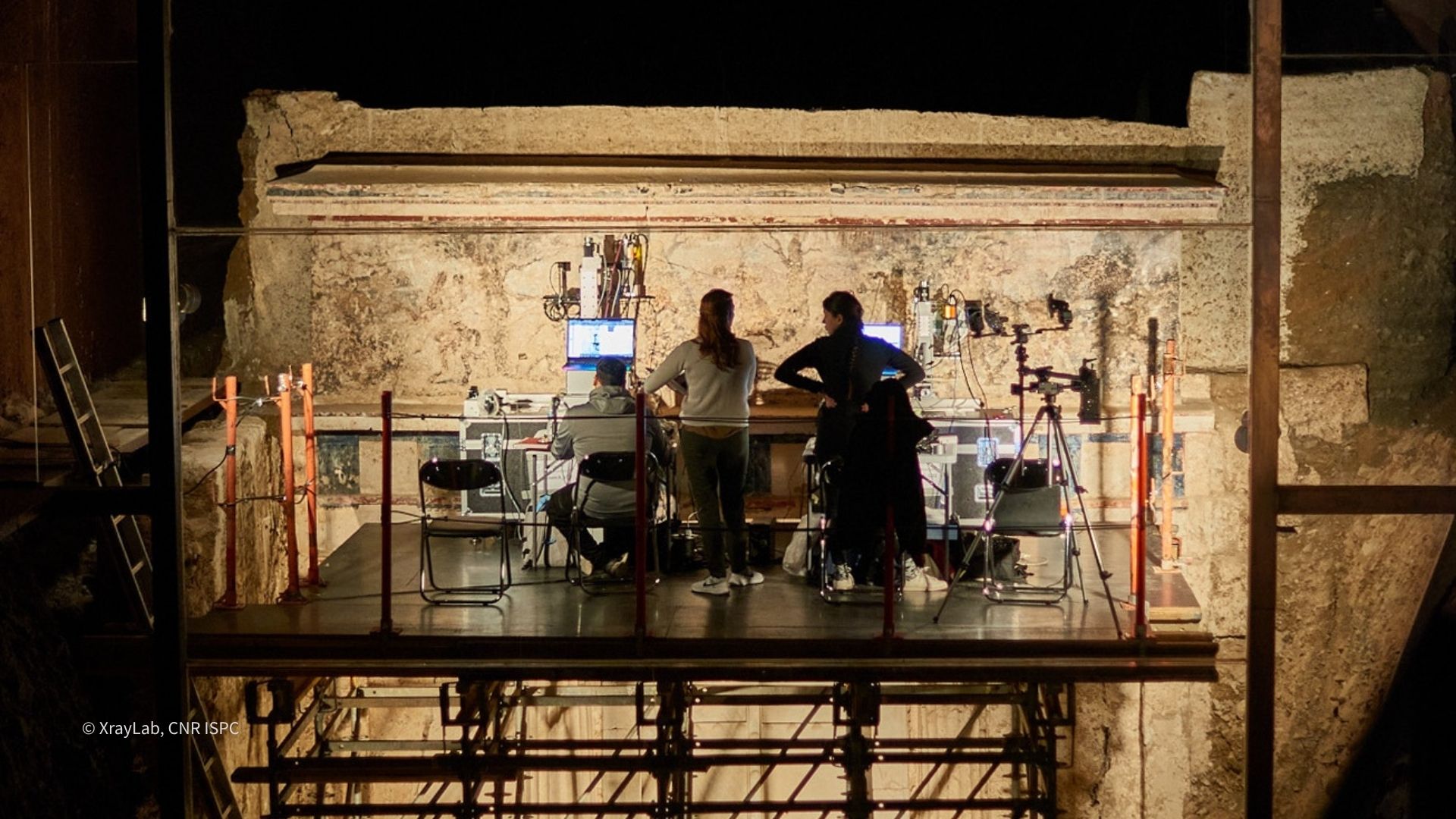
E-RIHS.it – MOLAB Campaign: The CNR ISPC XRAYLab team working on the access scaffold to the frieze of King Philip II’s tomb at Vergina, Greece. During the campaign, two X-ray techniques were employed simultaneously (MA-XRF and MA-XRD). | © XRAYLab, CNR ISPC.
Politecnico di Milano: vibroacoustic research in Cremona
The Musical Acoustics Laboratory of the Politecnico di Milano, based in Cremona, is an internationally recognised research facility at the intersection of acoustics, signal processing, computational methods, and musical instrument making. Developed through the expertise of Politecnico di Milano’s research groups in sound and vibration, the laboratory works in close proximity to the Cremonese heritage environment and in dialogue with institutions devoted to the scientific study of musical instruments.
The laboratory’s research has focused on the vibrational and acoustic characterisation of historical and contemporary musical instruments using non-invasive methods such as laser-based measurements, calibrated accelerometers, microphone arrays, 3D acquisition, and data-driven modelling. This work has contributed to the scientific understanding of how material and geometrical features shape instrument response and sound production.
Within REM@KE, DEIB Politecnico di Milano contributes specialised expertise in vibroacoustic analysis of keyboard action dynamics — the mechanical response of action components such as hammers, jacks, tangents, and dampers under the performer’s gesture. This is a crucial dimension of instrument behaviour that has often remained outside traditional organological description. REM@KE places dynamic behaviour at the centre of its documentation protocol, and Politecnico di Milano brings the technical methods needed to measure, model, and compare these behaviours across original and reconstructed instruments.
Scientific leadership is provided by Prof. Fabio Antonacci, whose research in audio signal processing and acoustic modelling reinforces REM@KE’s integration of engineering acoustics with organology, artistic research, and historical performance studies.
“The keyboard action is an extraordinarily subtle mechanical system. The relationship between the performer’s gesture and the resulting sound is mediated by components whose dynamic properties vary from one instrument to another, from one maker to another, and over time as materials age. Measuring these properties accurately and non-invasively is technically demanding, but it is essential if we want to understand what these instruments really felt like and sounded like under the fingers of historical performers.”
— Prof. Fabio Antonacci, DEIB Politecnico di Milano, Musical Acoustics Laboratory, Cremona
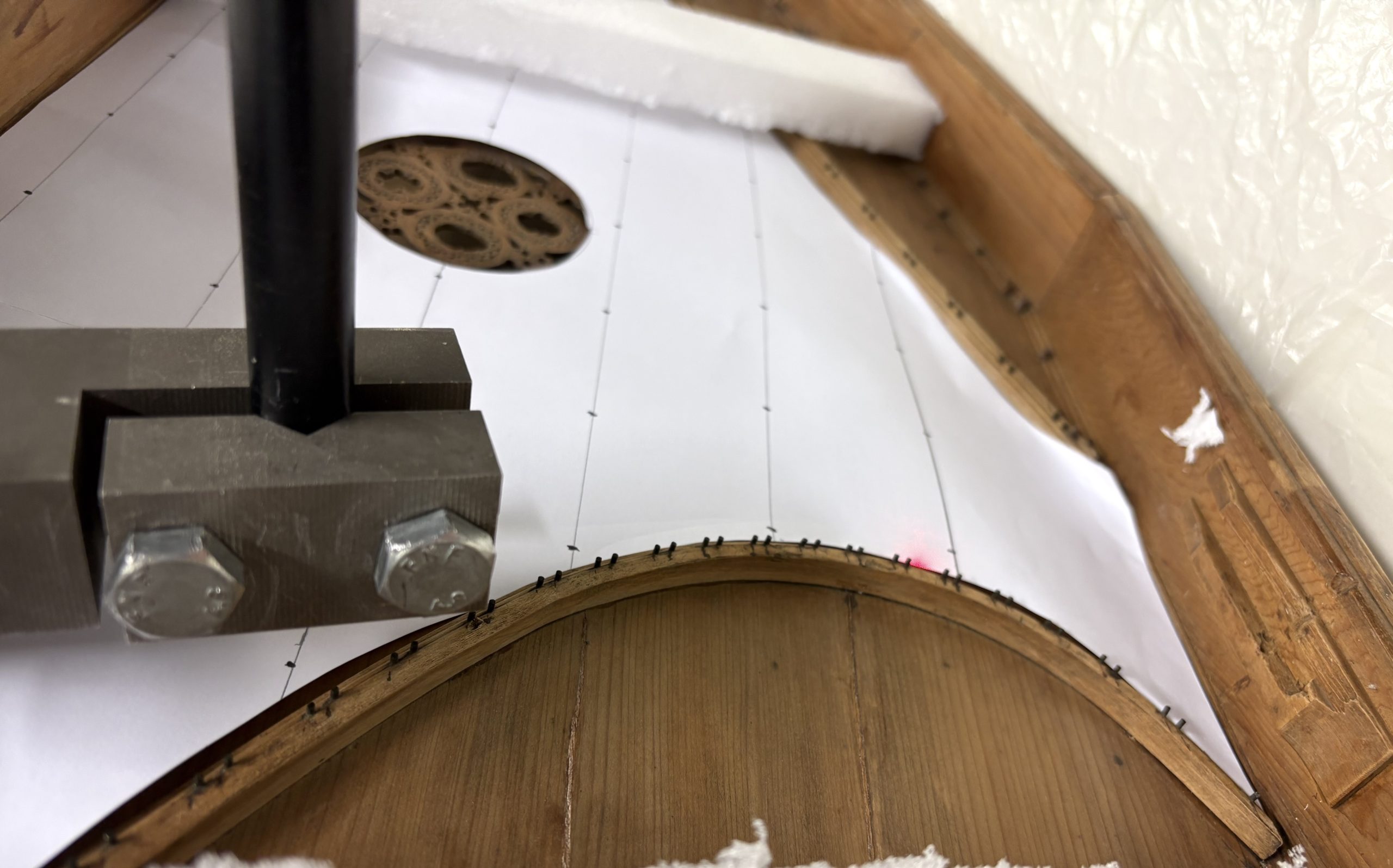
Detail of the admittance measurement system of the Antegnati 1554 arpichord soundboard.
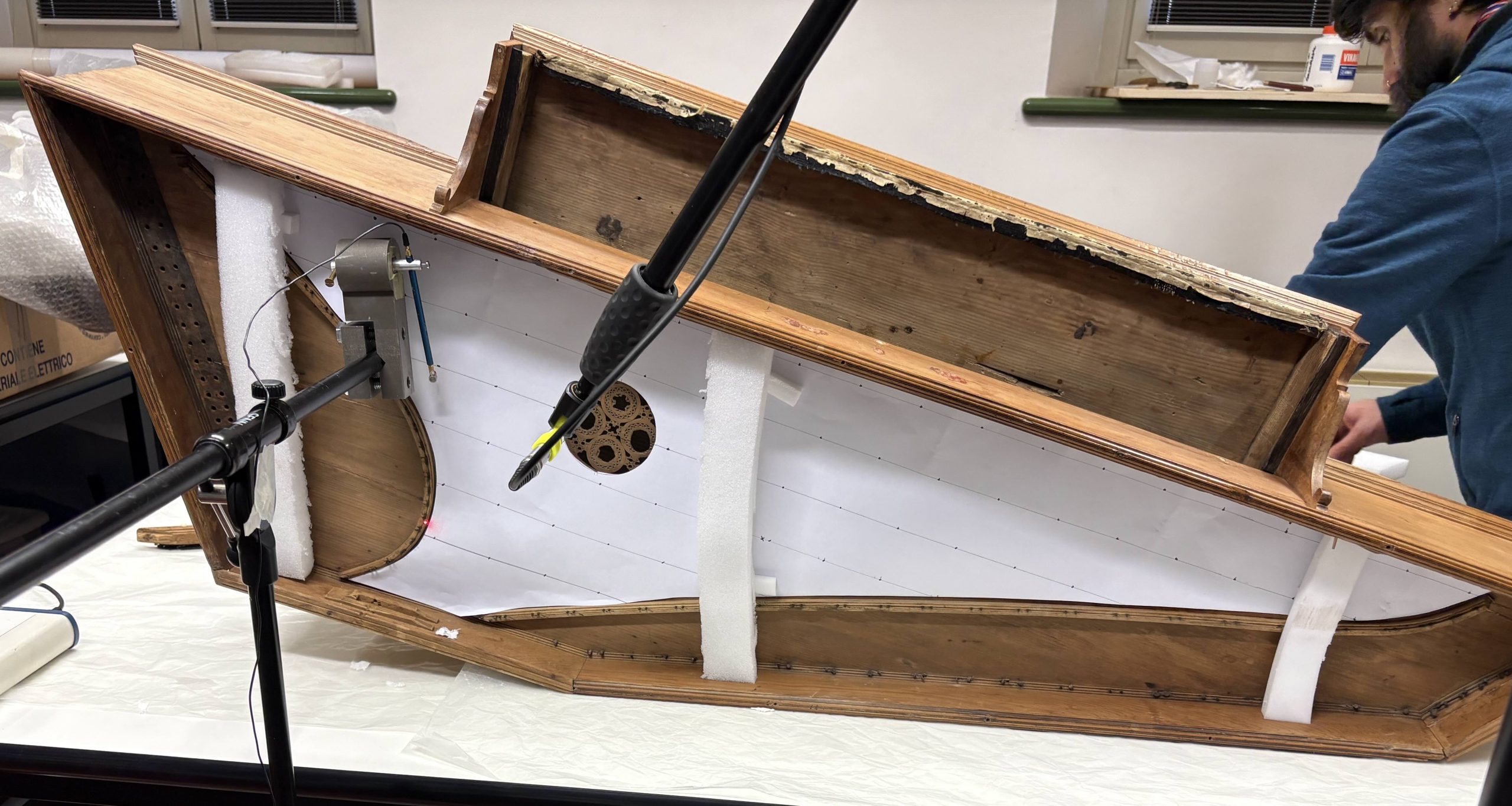
General view of the measurement system, consisting of an instrumented hammer, a laser vibrometer, and a measurement microphone.
A research ecosystem rooted in Cremona
The integration of CNR ISPC and DEIB Politecnico di Milano into REM@KE reinforces Cremona’s unique research ecosystem as a major centre for the science of musical instruments. The convergence of heritage diagnostics, vibroacoustics, organology, conservation, and performance research creates an interdisciplinary environment of exceptional value for the study of historical music technologies.
By extending this scientific infrastructure from the domain of bowed string instruments to keyboard instruments, REM@KE opens a new field of investigation into the material, acoustic, and embodied dimensions of European musical culture from the seventeenth to the nineteenth centuries.
About REM@KE
REM@KE (ERC Synergy Grant 2024, grant no. 101167101) is a 72-month research project led by Prof. Massimiliano Guido (University of Pavia, Corresponding PI), Prof. Andrea Schiavio (University of York), and Prof. Joel Speerstra (University of Gothenburg). The project develops Cognitive and Digital Organology (CaDO), a novel interdisciplinary framework integrating organology, embodied cognitive science, artistic research, materials science, and acoustics to reconstruct the lost relationships between historical keyboard instruments and the composers and performers who created music with them. Research outputs will be made available through an open-access REM@KE Portal and through restored and reconstructed instruments that will remain a lasting research resource.
Media contacts
Università di Pavia, Dipartimento di Musicologia e Beni Culturali | Linda Tonolli, Rem@ke Project Manager | remake@unipv.it | ufficiostampa.mbc@unipv.it | https://remake.unipv.it.
CNR ISPC — Istituto di Scienze del Patrimonio Culturale del Consiglio Nazionale delle Ricerche | Sandra Fiore, Media Relations CNR | sandra.fiore@cnr.it | www.ispc.cnr.it.
Politecnico di Milano | Emanuele Sanzone, Media Relations | +39 3316480248 | relazionimedia@polimi.it | relazionimedia-cremona@polimi.it.
REM@KE is funded by the European Research Council (ERC) under the European Union’s Horizon Europe research and innovation programme (grant agreement no. 101167101). The views and opinions expressed are those of the authors only and do not necessarily reflect those of the European Union or the ERC. Neither the European Union nor the ERC can be held responsible for them.
Download the Italian Press Release, HERE.